A conversation with David Tanner, independent board director with 28 years in private equity
Most underperforming private equity deals do not fail because the financial model was wrong. They fail because the leadership team was wrong for the next phase of the business.
That is the central message from David Tanner, an independent board director who has spent over 28 years working with a leading PE firm and more than a decade serving on PE-backed boards as CFO, CEO, President, Co-CEO and Chair.
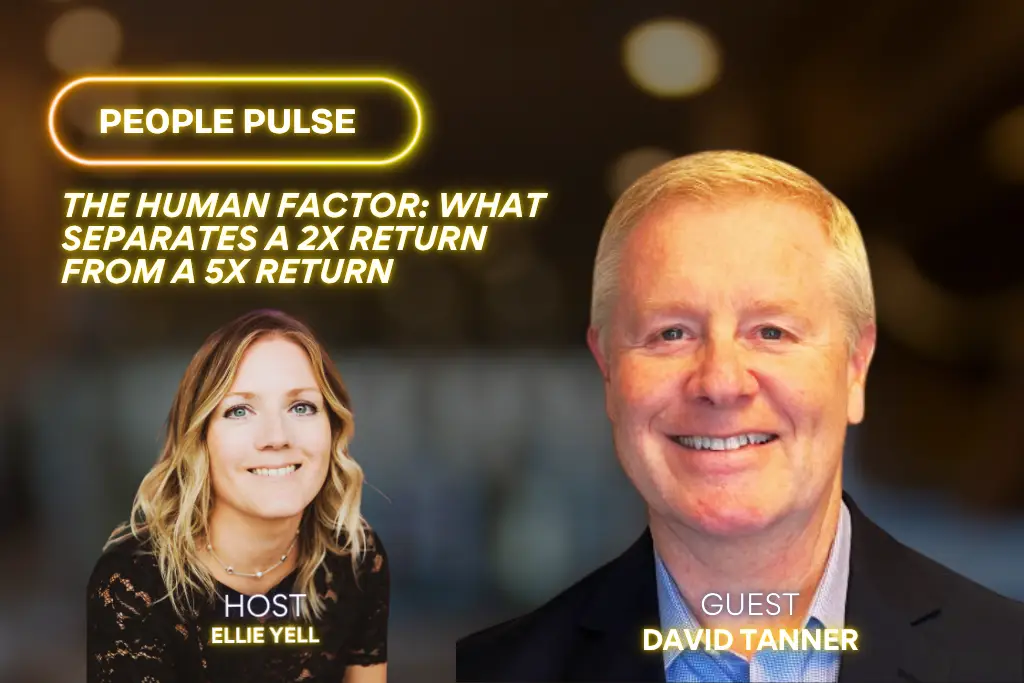
In the latest episode of People Pulse, the People Edge and TPC Leadership podcast, David sits down with Ellie Yell to unpack what really drives value creation in PE-backed businesses, and where investment committees, deal teams and chairs keep getting it wrong.
Here are the key insights from the conversation.
The biggest people risk that kills a PE investment
David is direct on this. The single biggest people risk is a business that depends on a small number of individuals who cannot scale the leadership and management of the business.
It is not about good or bad people. It is about whether the team is right for the next phase of growth.
Three non-negotiable traits for founder-led businesses
When assessing whether a founder-led business is ready for PE ownership, David looks for three things:
- Coachability. Founders who are not open to learning and development will struggle as expectations change.
- Willingness to delegate. What made founders successful, driving decisions personally, does not scale.
- Data-driven decision making. Intuition gives way to evidence, business plans and forecasts.
If any of these are missing, the transition gets painful fast.
What investment committees should be asking before they sign
Standard due diligence often misses the leadership risks that matter most. David recommends digging into:
- Who actually makes decisions in the business, and how they make them
- The accuracy of historical forecasts versus actual performance
- What the team did when they missed their numbers, whether they adjusted the forecast down or took corrective action
The response to missed performance tells you everything about resilience, innovation and learning capability.
The first 100 days: cadence, transparency and trust
In the first 100 days, the Chair’s job is to establish a monthly operating rhythm built around KPIs, board-ready reporting and transparency.
This is uncomfortable for many acquired companies. PE investors expect a level of operational visibility that founder-led teams have rarely experienced. Setting that expectation early, and getting the management team to buy into the plan rather than simply go along with it, is foundational.
Trust between the Chair and the CEO is earned through consistency, fairness and predictability. As David puts it, you do what you say.
Bench strength is the hidden driver of exit value
A common mistake in private equity is focusing diligence on the CEO and maybe the CFO, then leaving the new CEO to fix the rest of the team.
David argues that the next two layers of management matter just as much. If you put a strong leadership team on top of a weak middle management layer, you get chaos. The earlier this is understood, the better the compounding effect on enterprise value.
A bad CEO hire that takes 18 months to correct can wipe out a significant portion of the value creation window in a five-year hold.
Culture as a financial driver
Culture is not a nice to have. It is how people behave and how decisions get made. A stronger culture, built on accountability, trust and empowerment, drives faster execution, better retention and a more resilient business.
In private equity, where time is the enemy, culture compounds.
What a perfectly prepared leadership team looks like at exit
David’s checklist for exit readiness:
- A clear mission and direction
- Clear roles and responsibilities for every member of the team
- Strong bench strength with people who still have room to grow
- Incentives aligned across the team and with investors
- A proven track record of predictable performance, not dependent on a single founder
This is what investors are buying. Get it right, and the difference between a 2x and a 5x return often comes down to one thing: the right people in the right seats with a clear value creation plan.
Watch the full conversation
The full episode covers the four stages of a PE journey, pre-deal, first 100 days, value creation and exit readiness, with practical insights for board directors, PE operating partners, CEOs and HR leaders working in PE-backed environments.
Embed the podcast above to hear David’s full perspective, including the specific questions he wishes diligence teams would ask, and the human factor he believes separates good outcomes from great ones.
About People Edge
People Edge, in partnership with TPC Leadership, helps private equity firms and their portfolio companies de-risk human capital decisions and accelerate value creation through pre-deal culture and talent audits, leadership development and post-deal execution support.
Take the Human Capital Diagnostic at https://people-edge.com/human-capital-diagnostic/ to benchmark your portfolio’s people readiness.